www.joiiup.com
你我都要知道的運動處方原則!


全球不管是已開發國家或開發中國家,幾乎每個政府都花九牛二虎之力在跟日益嚴重的慢性病問題對抗。根據美國疾病管理局(CDC)的報告,美國每年2.7兆美元的醫療保健支出中,有86%歸因於慢性疾病,包含心臟病、中風、癌症、第2類型糖尿病、肥胖症和關節炎等疾病。[1]

我也常與大家分享:從事有效安全的運動,對慢性病的防治而言其效果跟藥物一樣好,而且沒有副作用。因此,把有效運動作為處方,當成預防慢性病的第一道防線,不管是在東方或西方、理論上或實證上,都已獲得廣大的支持與倡議。
然而在中文裡,我們常講的「運動」其實是一個相當模糊的概念名詞,一般認為身體有在活動甚至勞動就算是運動。王凱平醫師就曾說:一般意義上的勞動,通常相當於錯誤的運動。[2] 既然運動能被當作疾病處方,我們對「運動」當然就要有更嚴謹的闡述與定義。
以下就先把幾個大部份群眾認為是「運動」的常用名詞做個說明,以方便我們進一步探討運動處方的原則與設計。
- 體能活動(Physical Activity)
體能活動通常是指由骨骼肌收縮產生的任何身體運動,使能量消耗增加到基礎代謝以上而提升健康。[3]
- 鍛練(Exercise)
鍛練為體能活動的其中一個分類,它通常是指有計劃性、結構性、重複性和具目的性的,其目標是改善或維持身體適能(physical fitness)組成。「鍛練(exercise)」和「體適能訓練」經常互換使用,通常是指在休閒時間所進行的體能活動,其主要目的是改善、保持身體適能或健康狀態[3]。
- 體育運動(Sport)
體育運動涵蓋一系列體能活動,通常在一些規則下進行,並作為休閒或競賽的一部分。體育運動通常涉及由團隊或個人開展的體育活動,並由體育機構(如運動賽事/場館機構)提供支持[4]。
- 活動劑量(Dose / Dosage)
在體能活動領域,活動劑量是指參與者進行的身體活動量。總活動劑量由活動的三個組成構成:頻率、持續時間和強度。頻率通常表示為每天或每週的活動次數;持續時間是任何特定活動每次進行的時間長度;強度是執行活動(如:有氧鍛練)需要的能量消耗速率或阻力鍛練期間用力的大小。[3]
體能活動的類型
建議所有成年人進行各種不同的體能活動,來改善身體適能。不同類型的體能活動對身體適能會起不同作用,如表一所示:
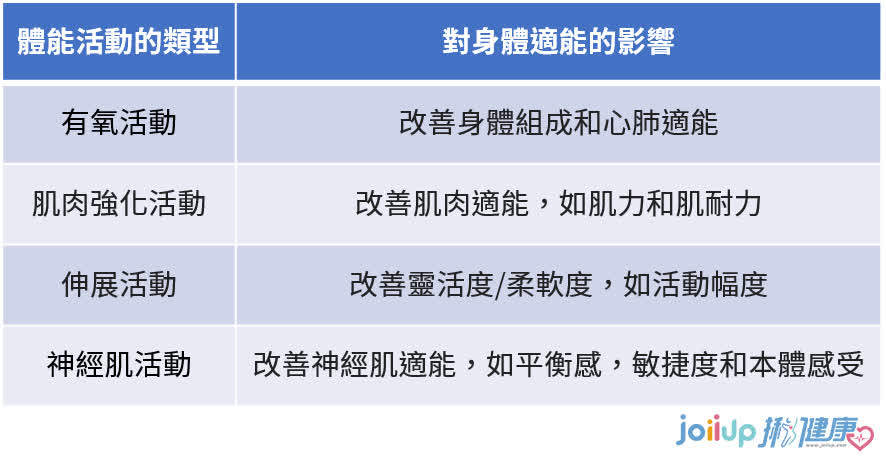 表1:體能活動的類型及其對身體適能的影響
有動總比沒有好,成人參與任何體能活動都會獲得一些健康益處,因此,建議所有成人都要避免缺乏身體活動[3]。為了大幅改善或維持患者的身體健康,保健服務提供者適合為患者提供個人化的建議、動力和鼓勵。下文將討論不同類型的體能活動的運動處方導覽。
有氧鍛練
有氧鍛練的種類
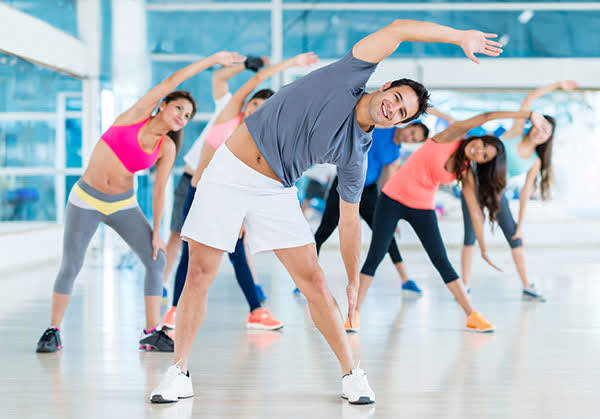
任何使用大肌肉群的活動、可長時間持續進行,並且具有節奏性的皆可視為有氧運動。一般而言,對於所有成年人來說,通常建議從事有氧運動來改善健康。有氧鍛練所需要的技巧很少,並且可以輕鬆修改以適應個人的身體適能水準。有氧鍛練通常以較高的強度進行,因此推薦給有規律鍛練的人,包括慢跑、快跑、健美操、踏步、跳舞。
有氧鍛練的劑量
有氧鍛練的劑量是由所進行的鍛練頻率(Frequency)、強度(Intensity)、持續時間(時間,Time)再結合運動類型(Type)組成,這四個因素即構成基本的運動處方核心原則(FITT原則)。在為患者開具有氧鍛練處方時,服務提供者應該能夠指定上述各組成部分。表2至5 [5]總結了關於FITT原則相關概念的進一步闡述。應該注意的是,即使體能活動的熱量消耗僅是小幅增加也可以改善身體適能的結果,由其對久坐的人所獲得的益處最為顯著。
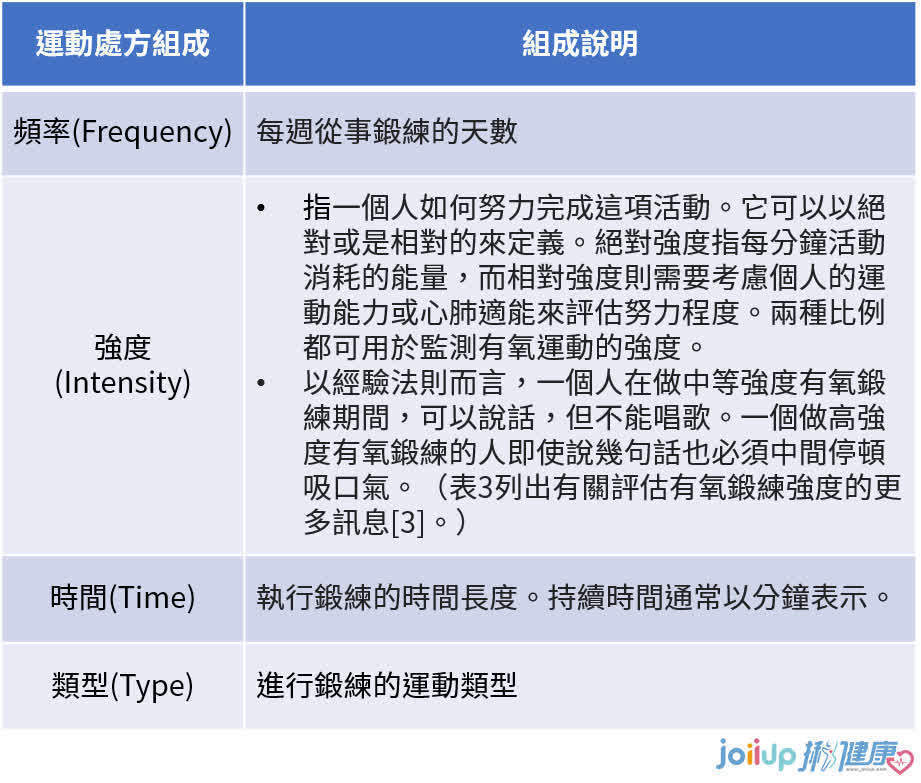 表2:制訂有氧鍛練FITT處方原則
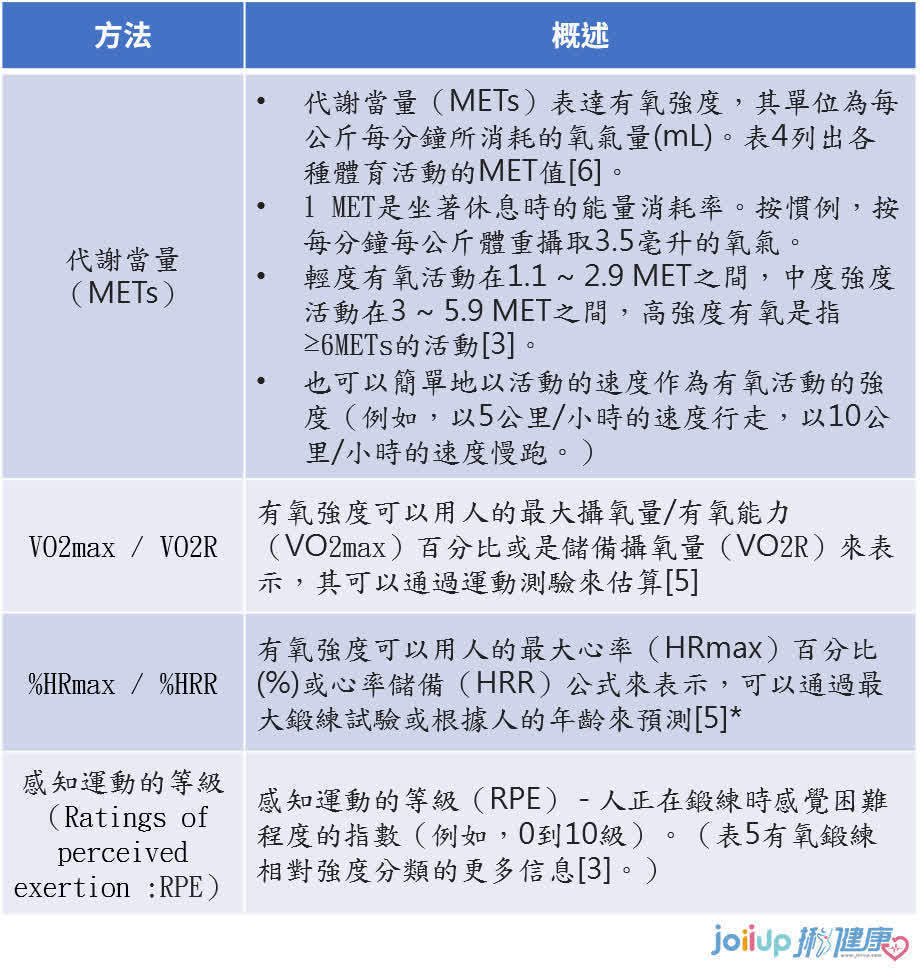 表3:評估有氧鍛練強度的方法
*保留心率(HRR) = 最大心率(HRmax) – 安靜心率(HR_rest)
*最大心率(HRmax) = 220–年齡
*運動目標心率=HRR % + HR_rest
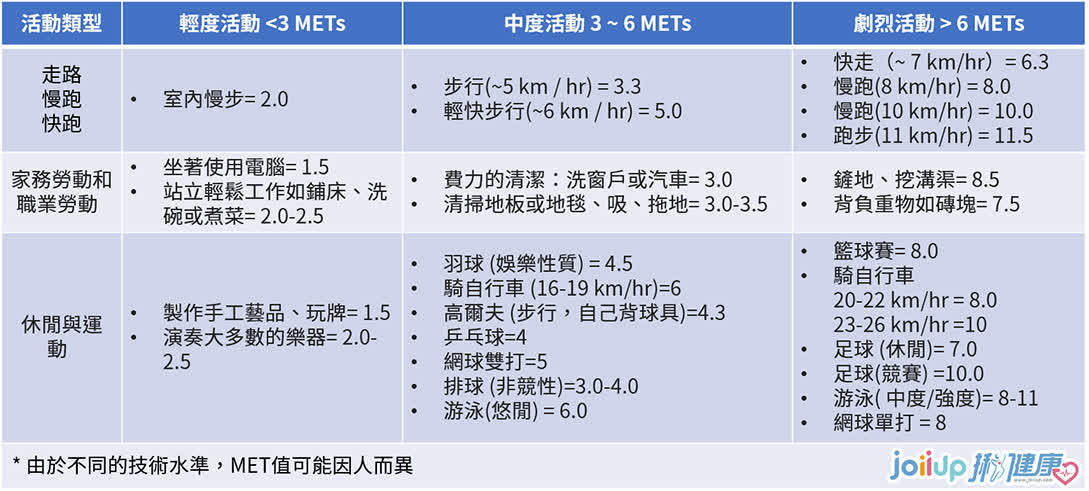 表4:常見有氧活動的MET等效值(點圖可以放大)
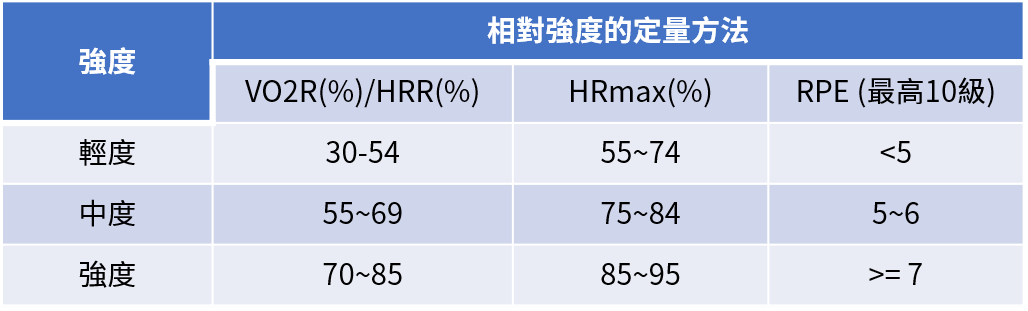 表5:有氧鍛練相對強度的分類
有氧鍛練的進展速度
有氧鍛練的進展是指隨著身體適應特定活動模式而增加活動量或鍛練的強度、持續時間、頻率的過程。建議的進展順序如圖1[5]所示。
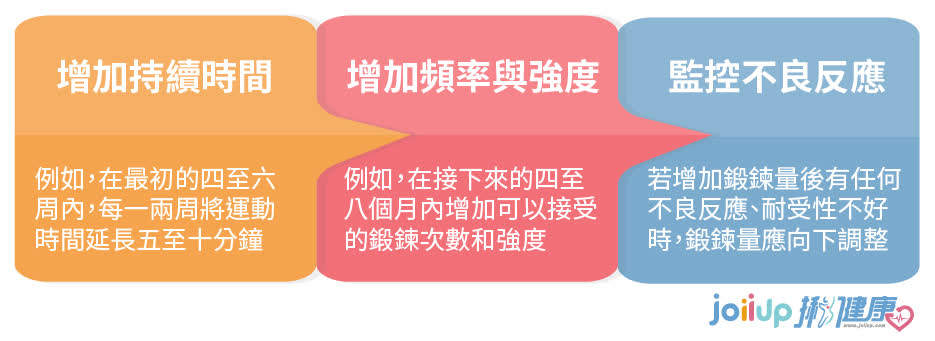 圖1有氧鍛練進展的建議順序
衍伸閱讀:運動都白做了?!教練帶你搞懂有氧指標/Kevin
肌肉鍛練
肌肉強化鍛練的類型
肌肉強化鍛練即是使肌肉超負荷訓練。如果肌肉強化鍛練涉及中等到高強度,並且對身體的主要肌肉群起作用,如腿部、臀部、背部、胸部、腹部、肩部和手臂,則可以視為肌肉強化鍛練。阻力訓練(包括重量訓練)是肌肉強化鍛練訓練眾所周知的例子,它可以使用FITT框架來規定。

阻力鍛練的劑量
阻力鍛練的劑量是由所進行鍛練的頻率、強度和量來決定。保健服務提供者應該能夠為患者開具阻力鍛練時所指定的劑量和類型。表6[3,5]總結了關於阻力鍛練FITT原則的進一步描述。需要特別指出的是,每次阻力鍛練都應該用適當的技巧來進行,不熟悉阻力鍛練的人應該在參加這些練習之前接受專業人員的指導。
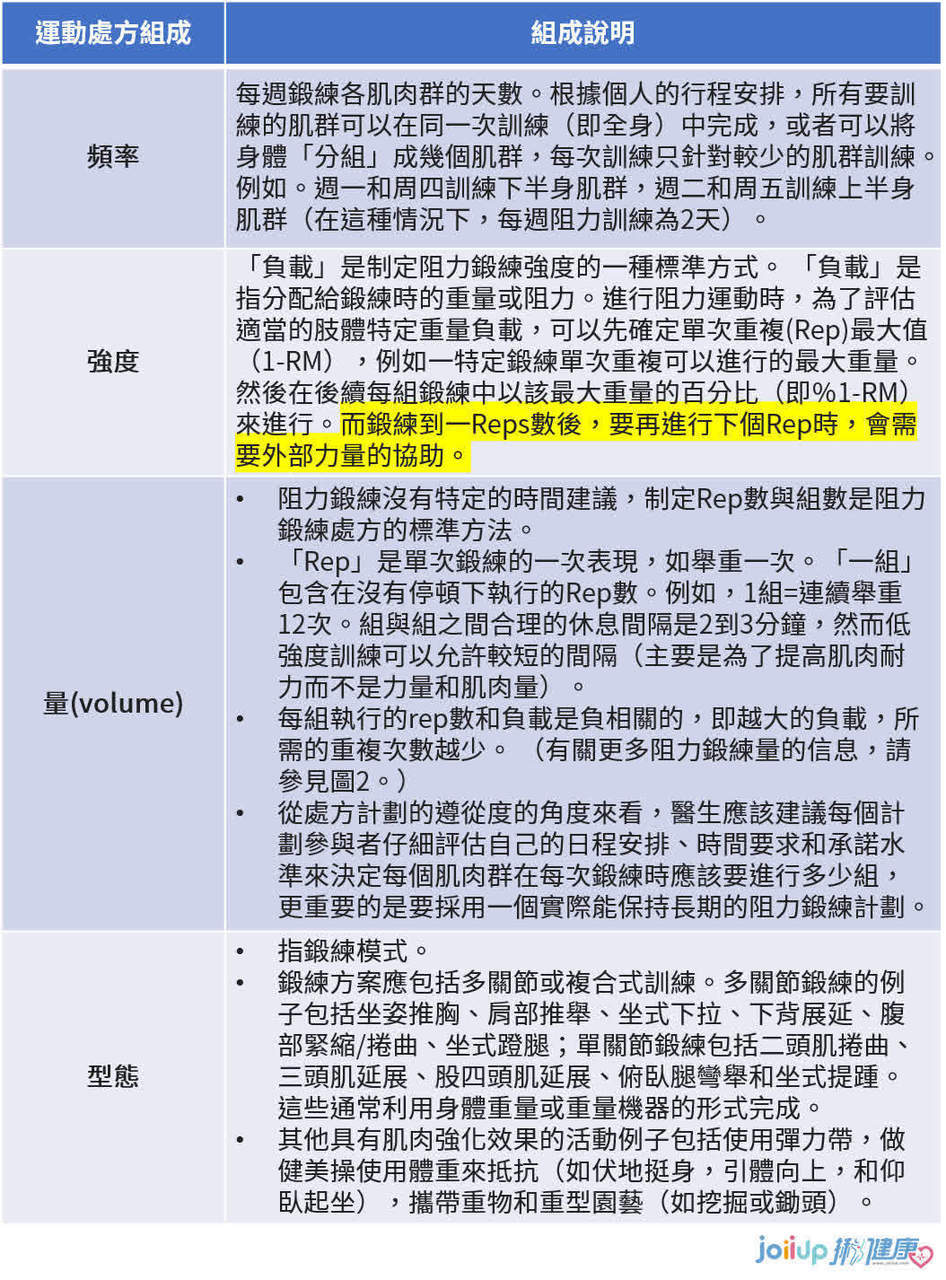 表6:訂定阻力訓練FITT處方原則
利用較重的負載與較少的Reps數可以強化肌肉力量,而較輕的負載與較高的Reps數則可以用來增強肌肉耐力。利用允許8至15 Reps數的負載,則通常有助於同時改善肌肉力量和耐力,如圖2所示。
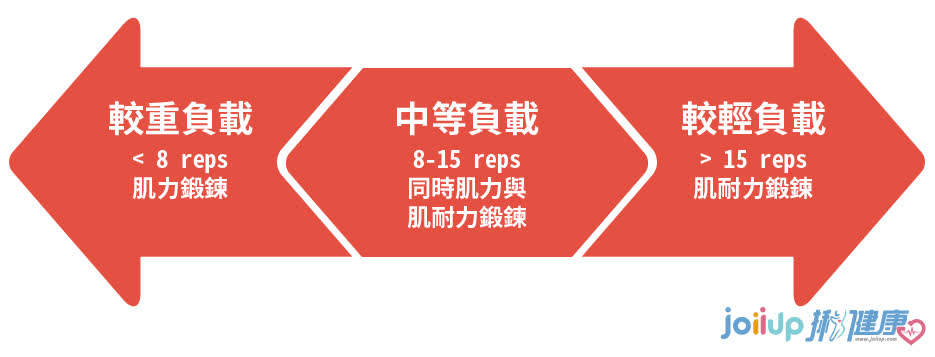 圖2 阻力鍛練的量
衍伸閱讀:【揪健康辭典】重量訓練:Reps & RM/咪卡
阻力鍛練的進展方式
隨著個體隨著鍛練計劃的提升,鍛練劑量可以增加(超負載)以促進肌肉力量和肌肉耐力的改善。可以透過調節幾個變量來實現超負載:
(a)增加負載(或強度)
(b)增加每組(set)的重複次數(reps)
(c)增加每次鍛練的組數
(d)減少組與組之間的休息時間以及
(e)增加鍛練頻率
在負重增加之前,建議初始先增加rep數量。當參與者可以舒適地達到規定reps數的「上限」時(通常是12~15 reps),則可以增加訓練負載(約5%)。
阻力鍛練注意事項:
- 從事鍛練時都必須要有事前的暖身和結束後的拉筋伸展各約10分鐘。
- 當你已感到疲憊時,就應停止阻力鍛練。
- 舉重時避免憋氣。因為憋氣可能會導致血壓的大幅變化。這種變化可能會增加異常心律(abnormal heart rhythm)的風險。
- 可考慮找有資格認證的運動專家來協助你設計運動計劃,以獲得最大的鍛鍊效果和最小風險。
伸展鍛練
伸展練習能有效提高柔軟度與靈活度,使人們更容易進行需要更大彈性的活動。因此,伸展練習是鍛練計劃的一個重要的部分。表7 [7,8]列出了伸展鍛練的基本類型。

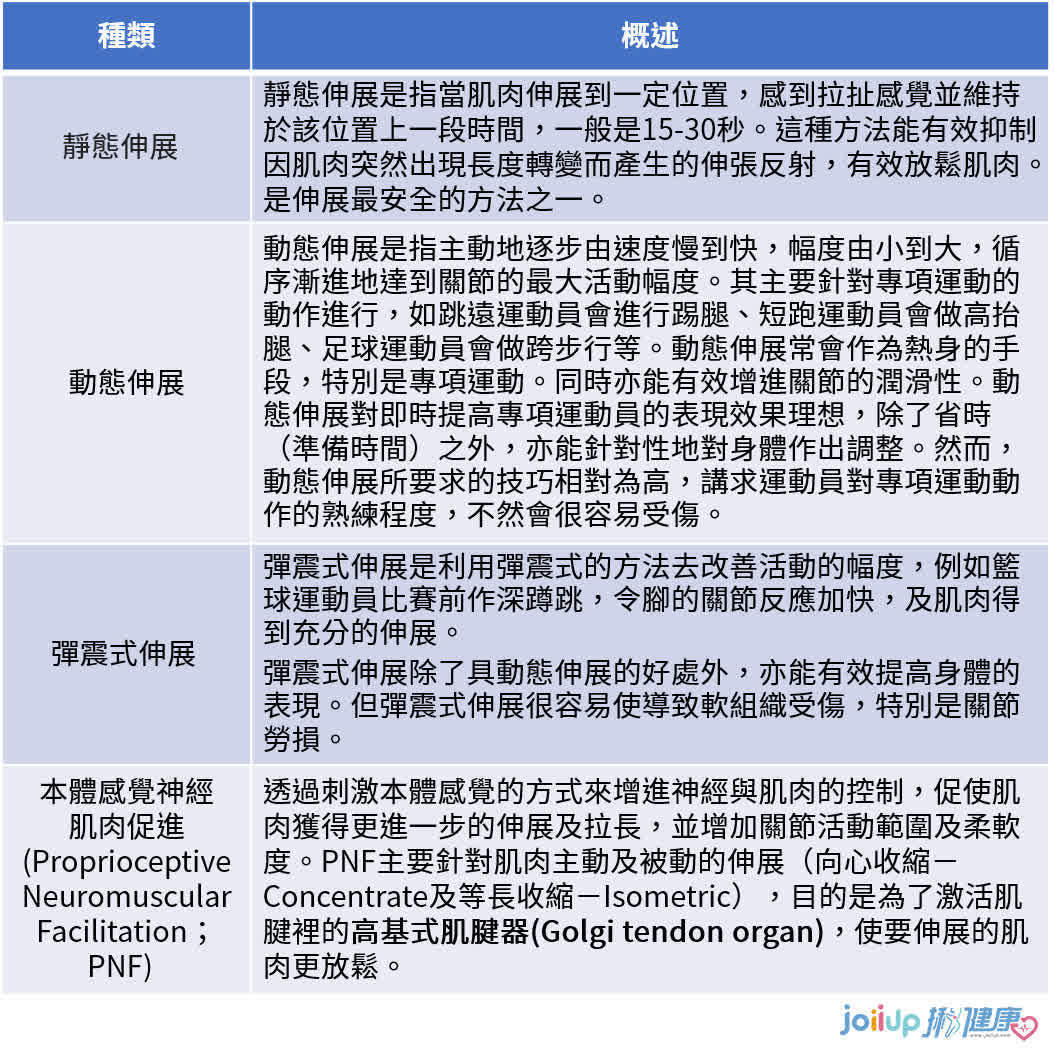 表7:伸展技巧的類型
單次鍛練課程的組成
表8總結單次鍛練課程的組成部分。
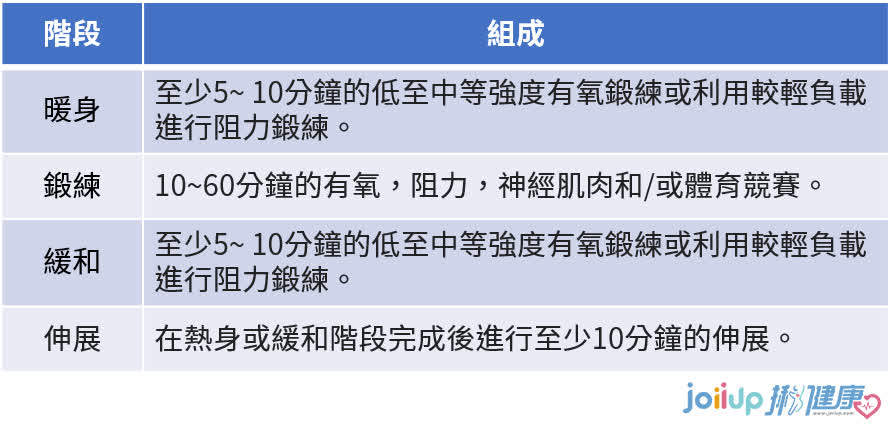
表8:單一次鍛鍊課程的組成
衍伸閱讀:專業教練出手,教你伸展簡單做/Kevin
促進鍛練的採用和維持
個人適應行為的改變對於促進日常生活身體活躍是相當關鍵的,但該過程涉及多種複雜的變量,包括個人,社會,環境和相關因素[9]。為了實現健康相關行為的長期變化,必須總體解決這些變量以及醫學因素[10]。有效的體能活動介入包括:
(a)增加社群支持和自我勝任感
(b)減少運動障礙
(c)使用信息激勵
(d)進行社群和物理環境變化[11,12]
如果基礎保健服務提供者能遵循下面描述的行為模型和諮詢技術,將更容易讓患者開始使用運動處方。
應用跨理論模式(TTM)
簡而言之,跨理論模式(Transtheoretical Model),假設一個個體在身體變得活躍時會經歷一系列的階段(即變化階段),藉由了解一個人所處的變化階段可研擬出與該參與者不同的合作策略,並針對個人的變化階段研擬出不同的干預方式。研究顯示處於變化早期階段的個體 - 懵懂期和沉思期 - 更可能使用變化的認知過程,如增加鍛練的知識和了解鍛練的好處。隨著人們進入後期階段(即準備和行動),他們開始使用更多的行為變革過程,例如爭取社群支持和可能的鍛練替代方案。服務提供者可參考表9,了解有關特定個體每個變化階段更多的細節。
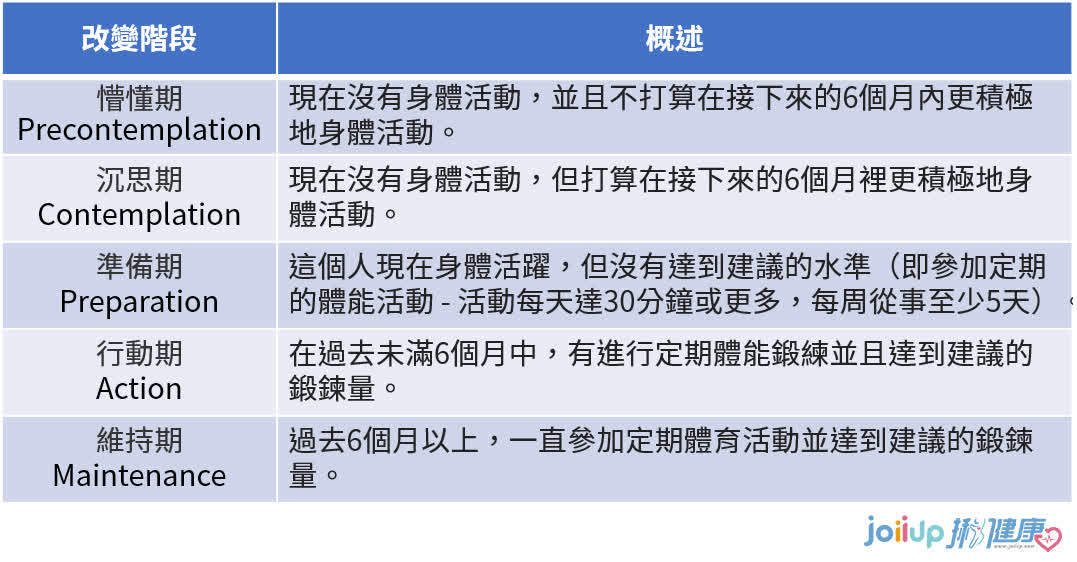 表9: 體能活動的變化階段[13]
小結
有效的運動跟藥一樣有效,重點是要做與持續,因此文末,特別納入如何加強運動遵從度的實用建議。[3,4,5]
- 釐清個人需求以建立鍛練的動機
- 確定個人可實現的鍛練目標和運動計畫
- 確定安全、方便和維護良好的鍛練設施
- 確定鍛練的社群支持
- 確定鍛練的環境支持和提醒
- 藉由鍛練進展和成就的自我監測機制來確定達到運動結果的激勵,例如計步器、心率錶。
- 強調並監測鍛練的立即性或直接效果
- 強調鍛練計劃的多樣性和樂趣
- 建立定期的鍛練計劃
- 提供合格,親切,熱情的鍛練專業人員
- 藉由從事中等強度的運動,將肌肉酸痛和受傷減到最低程度,特別是在導入鍛練的早期階段
不知道該怎麼開始動?試試看 JoiiCoach 我的隨身教練 吧!
參考文獻
- https://www.joiiup.com/knowledge/content/971
- https://www.joiiup.com/knowledge/content/1130
- Physical Activity Guidelines Advisory Committee. Physical Activity Guidelines Advisory Committee Report, 2008. Washington (DC); US Department of Health and Human Services; 2008.
- World Health Organization. Pacific physical activity guidelines for adults: framework for accelerating the communication of physical activity guidelines. World Health Organization, Western Pacific Region;2008.
- Walter R Thompson; Neil F Gordon; Linda S Pescatello. ACSM’s guidelines for exercise testing and prescription. 8th ed. American College of Sports Medicine; 2010.
- Ainsworth BE, Haskell WL, Whitt MC, Irwin ML, Swartz AM, Strath SJ, O'Brien WL, Bassett DR Jr, Schmitz KH, Emplaincourt PO, Jacobs DR Jr, Leon AS. Compendium of physical activities: an update of activity codes and MET intensities. Med. Sci. Sports Exerc 2000;32(suppl.):S498–504.
- American College of Sports Medicine. ACSM's Resource Manual for Guidelines for Exercise Testing and Prescription. 6th edition. American College of Sports Medicine. 2010.
- National Academy of Sports Medicine. NASM Essentials of Personal Fitness Training 3rd edition. NationalAcademy of Sports Medicine. 2007.
- Kahn, E. B., L. T. Ramsey, R. C. Brownson RC, et al. The effectiveness of interventions to increase physicalactivity: a systematic review. Am J Prev Med 2002; 22(4 Suppl):73–107.
- Sallis, J. F., K. Kraft, and L. S. Linton. How the environment shapes physical activity: a transdisciplinaryresearch agenda. Am J Prev Med 2002;. 22:208–15.
- Hillsdon M, Foster C, Thorogood M. Interventions for promoting physical activity. Cochrane Database SystRev 2005 Jan 25;(1):CD003180.
- Marcus BH, Forsyth LH. Motivating People to be Physically Active. Champaign (IL): Human Kinetics; 2003.
- Modified from Marcus BH, Forsyth LH. Motivating People to be Physically Active. Champaign (IL): Human Kinetics; 2003.